

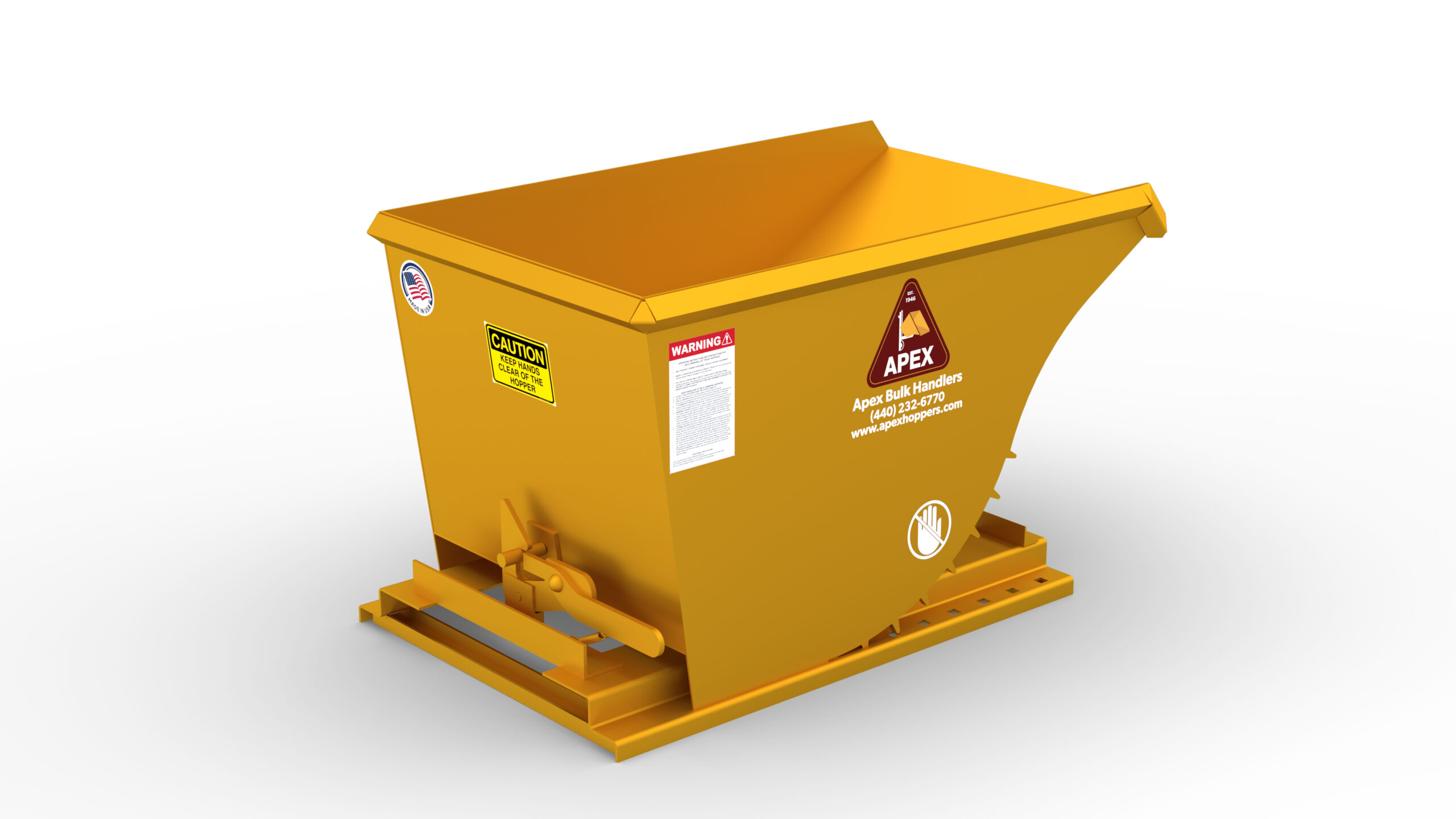
Heavy Duty Hoppers: What to Look for Before You Buy
If you’ve been shopping for a heavy duty hopper and every listing claims to be “industrial grade,” you’re not alone in feeling like the term has lost its meaning. Not every hopper marketed as heavy duty can handle daily abuse from scrap metal, aggregate or construction debris. This guide covers what to check before you buy, so you invest in equipment that lasts years, not months.
What Makes a Hopper “Heavy Duty”?
“Heavy duty” isn’t a regulated term, so it gets used loosely. A hopper only earns the label when its steel, welds and mechanism are built for repeated high-load cycles, abrasive material and rough handling by forklifts. In practice that comes down to four things:
- Thick steel in the body and, above all, in the base
- Continuous welds at every stress point
- A dump mechanism with as few separate parts as possible
- A load rating stated clearly for each size
Steel Thickness
Ask for the actual steel thickness of the walls and the base, not just “heavy gauge steel.” Thicker steel resists denting, punctures and long-term deformation from repeated loading. For scrap metal or sharp debris, the base matters even more than the walls, since that’s where impact and abrasion concentrate.
Welds and Reinforcement
Welds are often where cheaper hoppers fail first. Look for continuous welds rather than stitch or spot welds along seams and corners, and extra reinforcement at the fork pockets and the pivot, which take the most stress every time the hopper is filled, lifted or tipped.
The Dump Mechanism
The rocker and release are the moving parts of a self-dumping hopper, so they decide how long it keeps working. A rocker built from solid plate has fewer joints to loosen than one assembled from press-fit parts, welded pins or rivets. The release should let one operator dump the load safely without reaching into the tipping zone.
Load Capacity
Confirm the rated load in pounds for the exact size you’re buying, and size the hopper against the weight of your heaviest material, not only its volume. Then check that your forklift can carry the hopper’s loaded weight at the load center you’ll actually use.

How Apex Builds Heavy Duty Hoppers
Our self-dumping hoppers are built in-house in Cleveland, Ohio:
- Hopper bodies of 7-gauge and ¼” mild carbon steel, with bases of ¼” plate, and thicker gauges available
- Continuous welding inside the bucket for strength in critical areas
- A Solid Plate Rocker design, stronger than press-fit, welded-pin or riveted multi-piece assemblies
- The E-Z Release handle, so dumping is safe, effortless and quick
The heavy duty line handles capacities of up to 8,000 lbs. Standard sizes run from ¼ cubic yard through 5 cubic yards, with a 6 yard hopper also built, and the popular 2 yard model is rated at 6,000 lbs. We also modify any standard hopper to fit an application, with plate thickness and reinforcement quoted against your actual load.
| Model / line | Standard sizes | Rating |
|---|---|---|
| Self-dumping hoppers | ¼ to 5 cubic yards, plus a 6 yard | Up to 8,000 lbs (2 yard: 6,000 lbs) |
| Multi-Dump Buckets | 1, 1½ and 2 cubic yards, plus custom | Quoted to your load |
| Crane buckets | Standard and custom sizes | Up to 8,000 lbs |
Questions to Ask Before You Buy
- What steel thickness is used in the base versus the walls?
- Are the welds continuous, and are stress points reinforced?
- How is the rocker built, and how does the release work?
- What’s the rated load for this exact size?
- Will it handle the material you’re loading — scrap, aggregate, concrete, debris?
- Can the design be modified for your application?
Compare our self-dumping hoppers and the rest of our industrial hoppers range, or request a quote and tell us what you load and how often you dump.
Frequently Asked Questions
What steel are Apex self-dumping hoppers made from?
Hopper bodies are 7-gauge and ¼” mild carbon steel, and the bases are ¼” plate. Thicker gauges are available.
How much can an Apex heavy duty hopper carry?
The heavy duty line handles capacities of up to 8,000 lbs. The popular 2 yard model is rated at 6,000 lbs.
Can Apex modify a standard hopper?
Yes. Any standard hopper can be modified to fit an application, with plate thickness and reinforcement quoted against your actual load.