

Self-Dumping Hoppers for Concrete: A Practical Guide
Concrete, rubble and masonry debris are heavy, abrasive and hard on equipment. A self-dumping hopper lets a forklift carry that material from where it’s generated to the dumpster or truck and empty it without anyone tipping it by hand. This guide covers how self-dumping hoppers work, how to size one for concrete, and how to keep it working.
What Is a Self-Dumping Hopper?
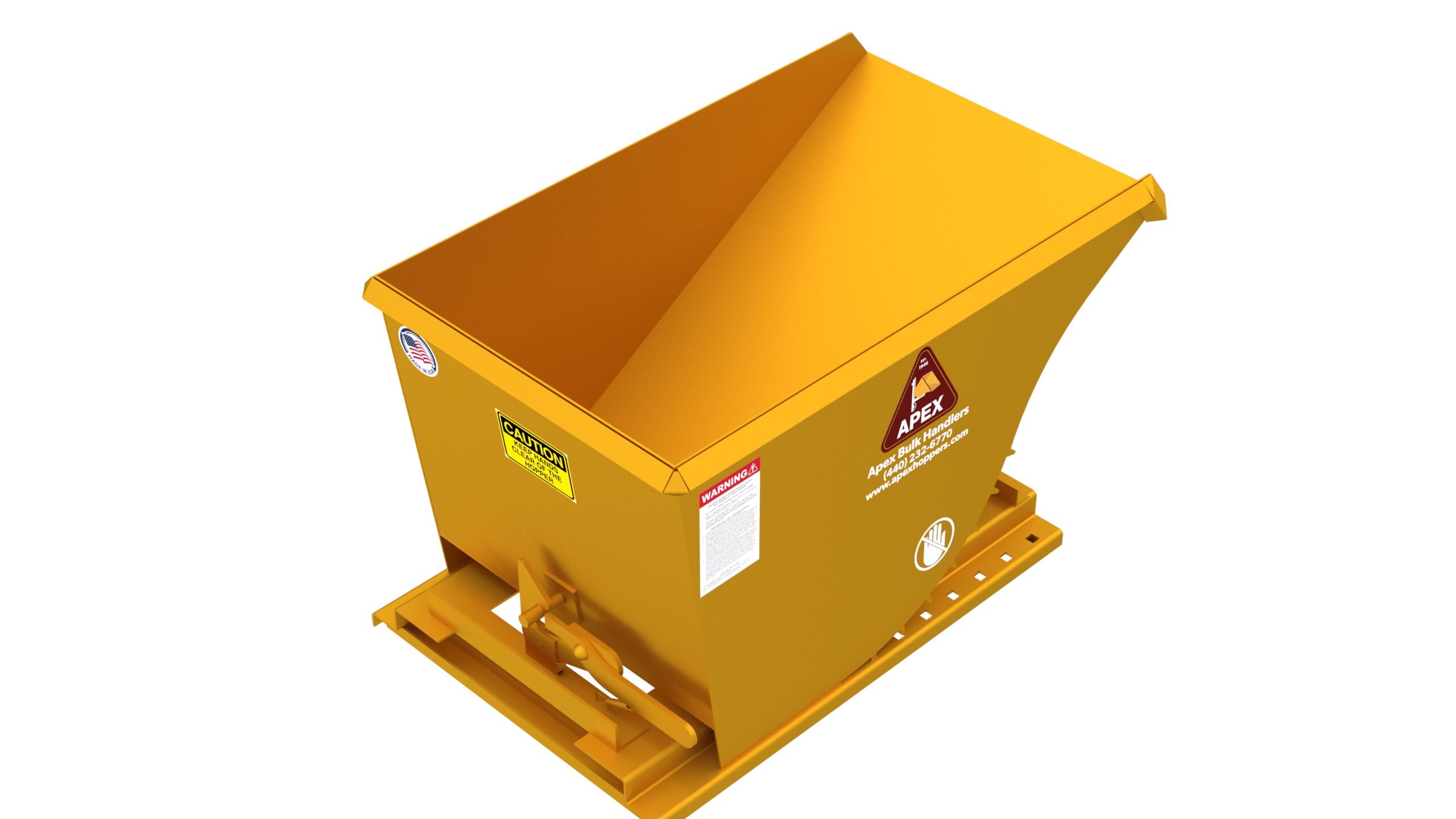
A self-dumping hopper is a steel tub on a base with fork pockets, carried by a forklift. When the operator releases it and tilts the forks forward, the hopper pivots and empties, and many models return to the upright position on their own once they’re empty. Nobody has to stand next to the load to tip it.
Why Weight Decides the Size
With concrete and rubble, the limit you reach first is weight, not volume. A hopper that’s only half full of broken concrete can already be at its rating. So size the hopper against the load, and check the loaded weight against your forklift as well as the hopper.
Our heavy duty line handles capacities of up to 8,000 lbs, in standard sizes from ¼ cubic yard through 5 cubic yards. For medium-scale construction and renovation debris, the 2 yard hopper is the most common choice, with a 6,000 lb rating and a balanced size-to-capacity ratio. See self-dumping hoppers for concrete and heavy debris for the details.
What to Look For in a Hopper for Concrete
- Hopper bodies of 7-gauge and ¼” mild carbon steel, with bases of ¼” plate, and thicker gauges available
- Continuous welding inside the bucket for strength in critical areas
- A Solid Plate Rocker design, stronger than press-fit, welded-pin or riveted multi-piece assemblies
- The E-Z Release handle, so dumping is safe, effortless and quick
If you load concrete continuously, the plate thickness and reinforcement can be specified for that load rather than taken off the shelf. Any standard Apex hopper can be modified to fit the application.
Safety When Dumping Concrete and Debris
- Never exceed the hopper’s rated load, even for a single trip
- Check the forklift’s capacity at the load center you’ll actually use, with the hopper loaded
- Keep the load low while traveling, and plan routes away from soft or uneven ground
- Set a clear dump zone and keep people out of the area the hopper tips into
When a Forklift Isn’t the Right Tool
On sites where material has to travel farther than a forklift can practically carry it, a Tow-N-Dump towable hopper can be pulled behind a vehicle. Where an overhead crane does the lifting, a crane bucket or a Multi-Dump Bucket, which works with both lift trucks and overhead cranes, is the better fit.

Keeping Concrete From Building Up
- Rinse the tub after each shift, before residue has a chance to cure
- Check the pivot and release for dust and debris that could affect dumping or the return
- Touch up worn paint promptly, since exposed steel corrodes faster
A hopper that’s cleaned daily keeps dumping cleanly for far longer. To size a hopper for your concrete or debris, request a quote and tell us the material and how much you move per day.
Frequently Asked Questions
Can a self-dumping hopper handle concrete and heavy debris?
Yes. Concrete, rubble and masonry debris are dense, so the limit you reach first is weight rather than volume. The Apex heavy duty line handles capacities of up to 8,000 lbs.
What size hopper is best for construction debris?
For medium-scale construction and renovation debris, the 2 yard hopper is the most common choice, with a 6,000 lb rating.
How does a self-dumping hopper empty?
The operator releases the hopper and tilts the forks forward, and the hopper pivots to empty. Many models then return to the upright position on their own.