

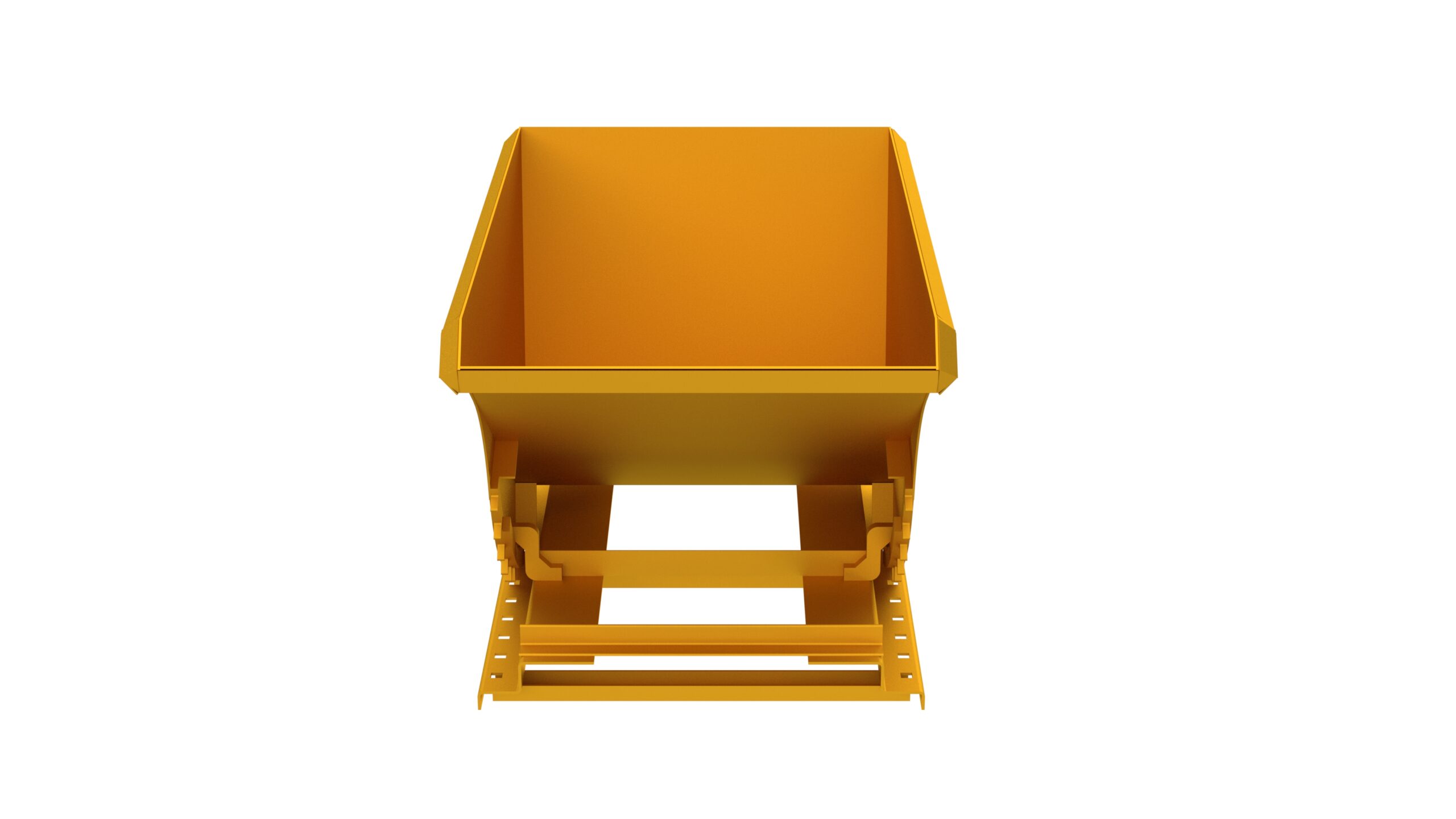
Industrial Dumping Hoppers: How They Improve Scrap and Waste Handling
Scrap and waste-heavy operations put more stress on material handling equipment than almost any other application. Sharp edges, unpredictable loads and constant cycling wear down containers that weren’t built for the job. Industrial dumping hoppers are designed to take that punishment while speeding up how scrap moves from the production floor to the collection point.
Why Scrap and Waste Facilities Use Dumping Hoppers
The cost of manual scrap handling
Shoveling, sweeping or hand-carrying scrap metal, wood offcuts or process waste is slow and labor-intensive. Every extra time the same material is handled adds labor cost and another chance of a cut or a lifting injury.
Safety and housekeeping
Loose scrap on the floor is a trip and puncture hazard. A dumping hopper gives crews one contained place to drop scrap as it’s generated, which keeps walkways clear and makes housekeeping inspections easier.
How Industrial Dumping Hoppers Work
The cycle is simple: scrap goes into the hopper at the point where it’s generated, a forklift carries it to the dumpster or bin, and the hopper empties without anyone tipping it by hand. What changes between designs is how it empties.
Self-Dumping vs. Drop-Bottom Designs
Self-dumping hoppers
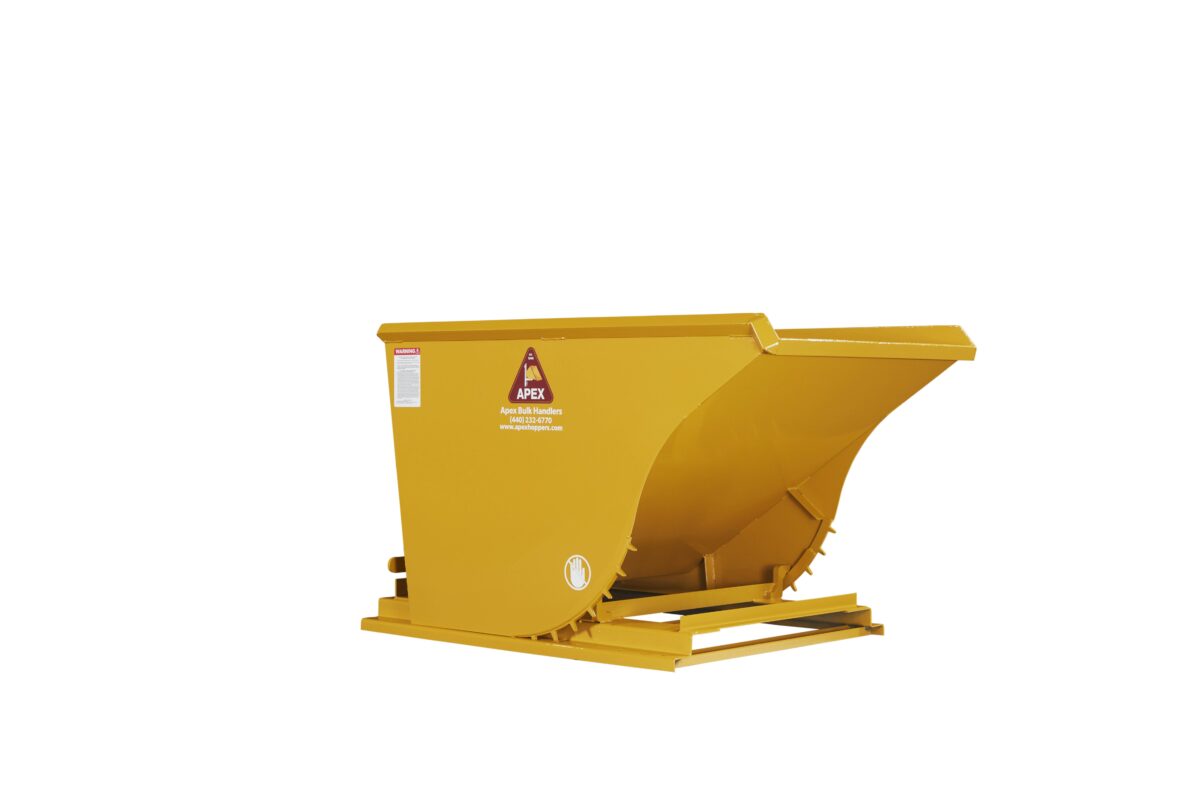
A self-dumping hopper pivots forward to empty when the operator releases it and tilts the forks, and many models return upright on their own. It suits free-flowing scrap and general waste dumped into an open container.
Drop-bottom Multi-Dump Buckets
A Multi-Dump Bucket empties through a hinged bottom door, released with a lanyard-style front release or a side release handle. The door locks again automatically when the bucket is set down on a flat surface. Because it works with both lift trucks and overhead cranes, one container can cover areas served by either.
| Self-dumping hopper | Multi-Dump Bucket | |
|---|---|---|
| Empties by | Pivoting forward | A hinged bottom door |
| Handled by | Forklift | Lift truck or overhead crane |
| Standard sizes | ¼ to 5 cubic yards, plus a 6 yard | 1, 1½ and 2 cubic yards, plus custom |
| Rating | Up to 8,000 lbs | Quoted to your load |
Durability for Sharp or Heavy Scrap
Turnings, stampings and mixed metal scrap punish thin steel and weak welds. These are the details that keep an Apex hopper in service:
- Hopper bodies of 7-gauge and ¼” mild carbon steel, with bases of ¼” plate, and thicker gauges available
- Continuous welding inside the bucket for strength in critical areas
- A Solid Plate Rocker design, stronger than press-fit, welded-pin or riveted multi-piece assemblies
- The E-Z Release handle, so dumping is safe, effortless and quick
Our Multi-Dump Buckets are built from hot-rolled mild steel with continuous welds, with reinforced inside bottom corners, outer lip and drop door, and a positive locking system with a safety pin.
Matching Capacity to Your Scrap Volume
An undersized hopper means more trips; an oversized one wastes floor space and can exceed the forklift’s capacity once loaded. Dense scrap reaches a hopper’s weight limit before it fills the volume, so size against the weight of your heaviest load as well as your daily volume.
Industries That Rely on Dumping Hoppers
Metal fabrication and machine shops, foundries, recycling centers, demolition contractors and manufacturing plants all generate scrap that benefits from a dedicated hopper. Common loads include scrap steel, glass, stampings, sawdust, rubber, ash, aggregates, construction debris and solid waste. See waste hoppers for trash and scrap, browse our industrial hoppers, or request a quote sized to your scrap volume and material.
Frequently Asked Questions
What is the difference between a self-dumping hopper and a Multi-Dump Bucket?
A self-dumping hopper pivots forward to empty and is carried by a forklift. A Multi-Dump Bucket empties through a hinged bottom door and works with both lift trucks and overhead cranes.
What materials can a dumping hopper handle?
Production scrap, metal offcuts, stampings, wood waste, glass, rubber, aggregates, construction debris, recyclables and general trash.
What sizes do Multi-Dump Buckets come in?
Standard sizes are 1, 1½ and 2 cubic yards, with custom options available.